
AirCarto at the CitiObs final event in Amsterdam
In early November, Noa Giannone represented AirCarto in Amsterdam, where the European CitiObs project brought together the citizen observatories of the environment it has worked with.
Coordinated by the Norwegian institute NILU, CitiObs helps citizen observatories turn their measurements into a tool for action. Its final event brought together initiatives from countries including Italy, Ireland, Norway, Spain, Ukraine, Greece and the Netherlands, which measure air, heat, noise, odours or wildfires.
Sensors and maps on the stand
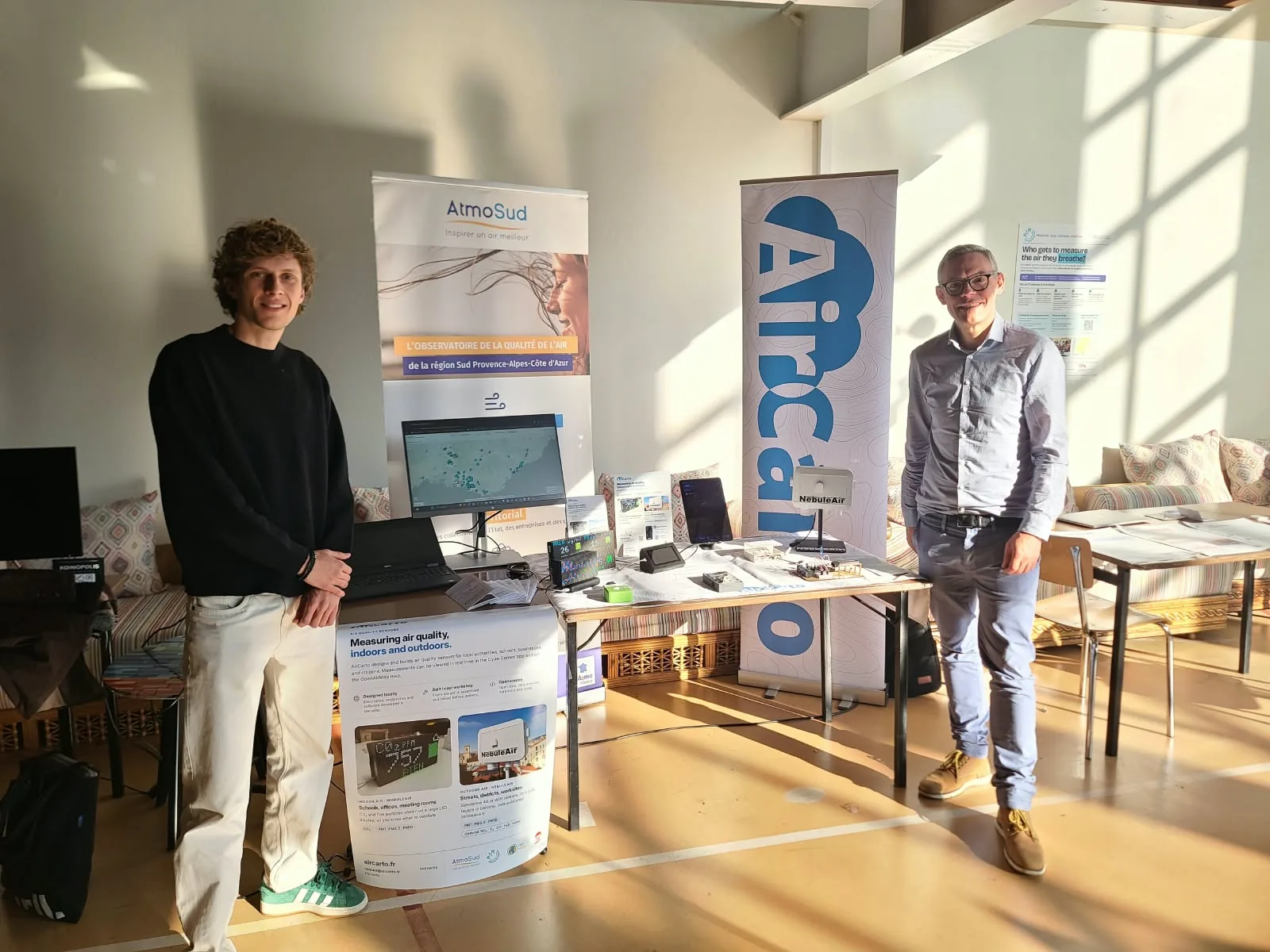
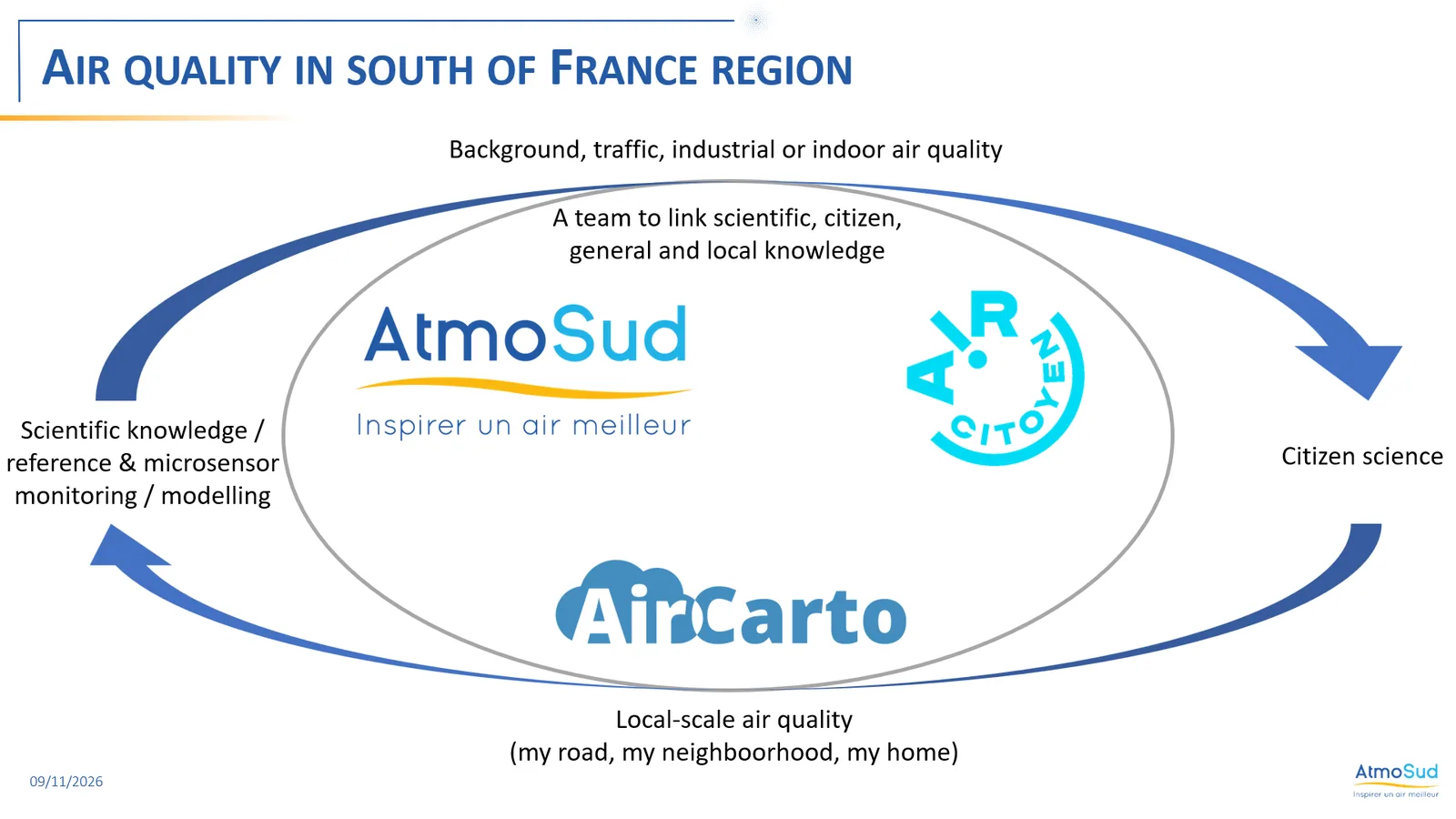
On Friday, at Ru Paré, a community centre in Amsterdam, each observatory presented its work on a stand. Ours, shared with AtmoSud, showed our sensors, a poster of the range and our air quality maps on a screen and a tablet. The ModuleAir drew visitors in, who then discovered the OpenAirMap map, the sensor evaluation work and the individual support offered by Air citoyen.
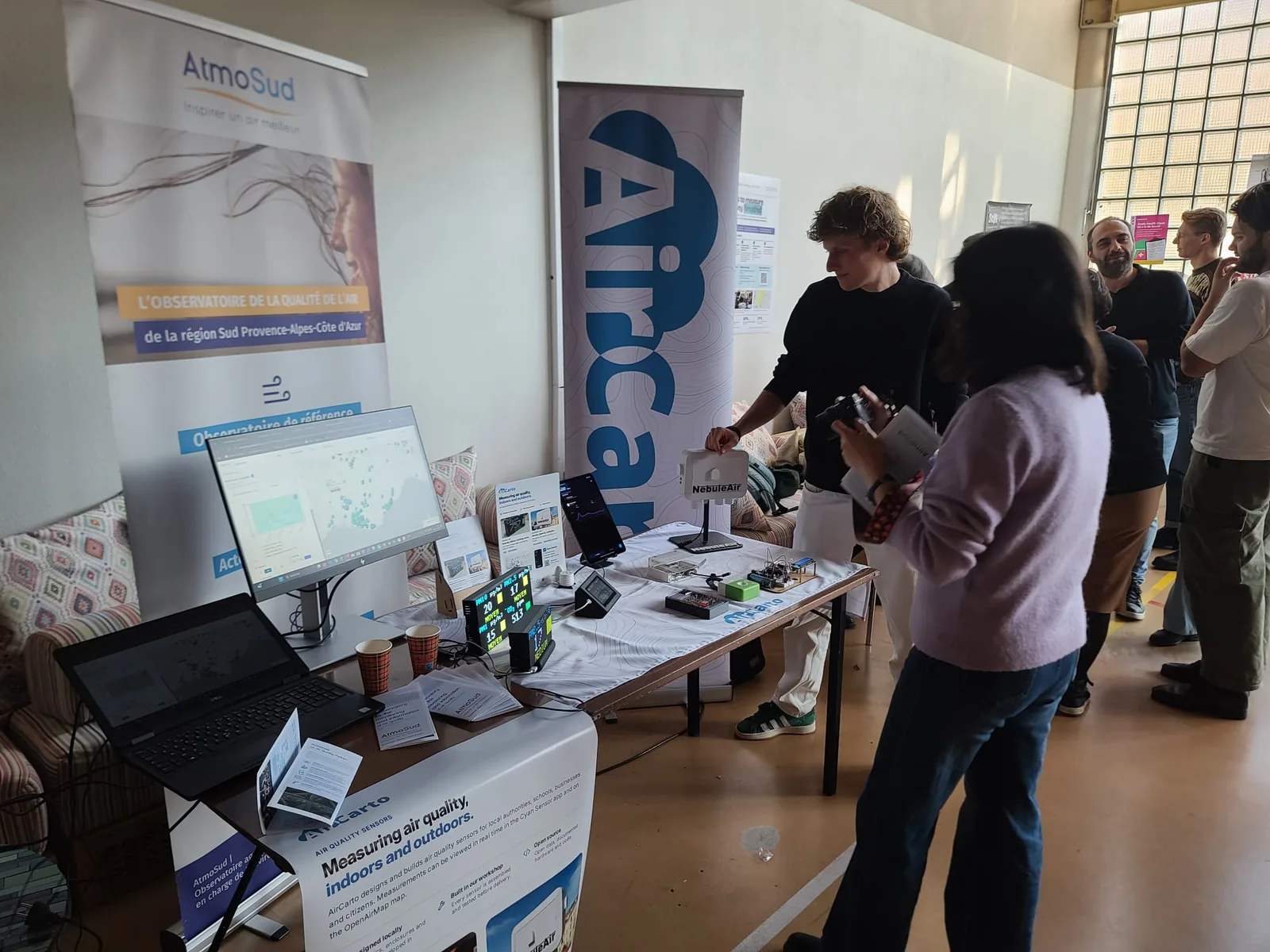
On Thursday, during a presentation, a ModuleAir placed in the room indicated that it was time to ventilate: 882 ppm of CO₂ on the display, with the word "Ventilate".
A chain of trust, from sensor to citizen
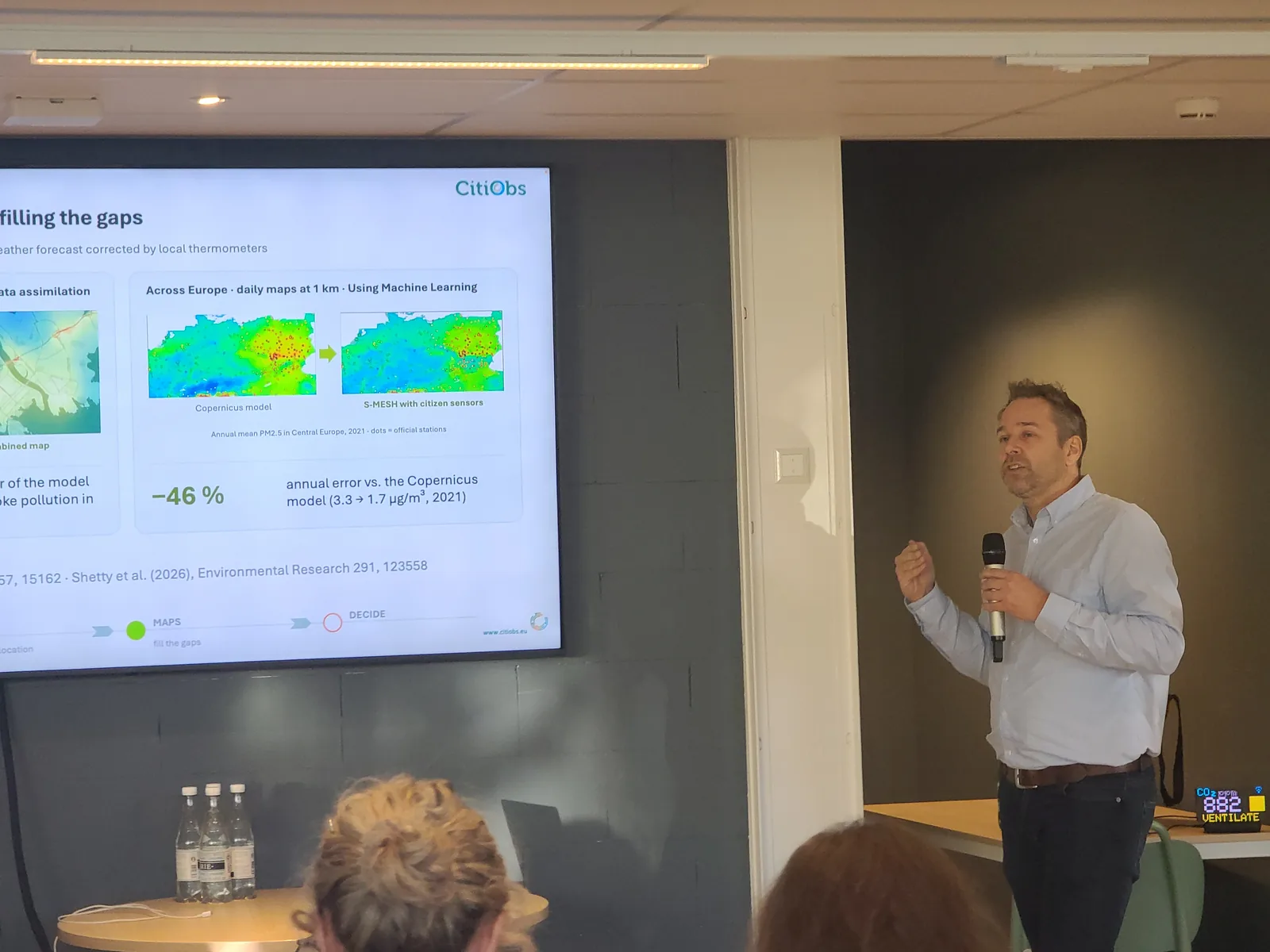
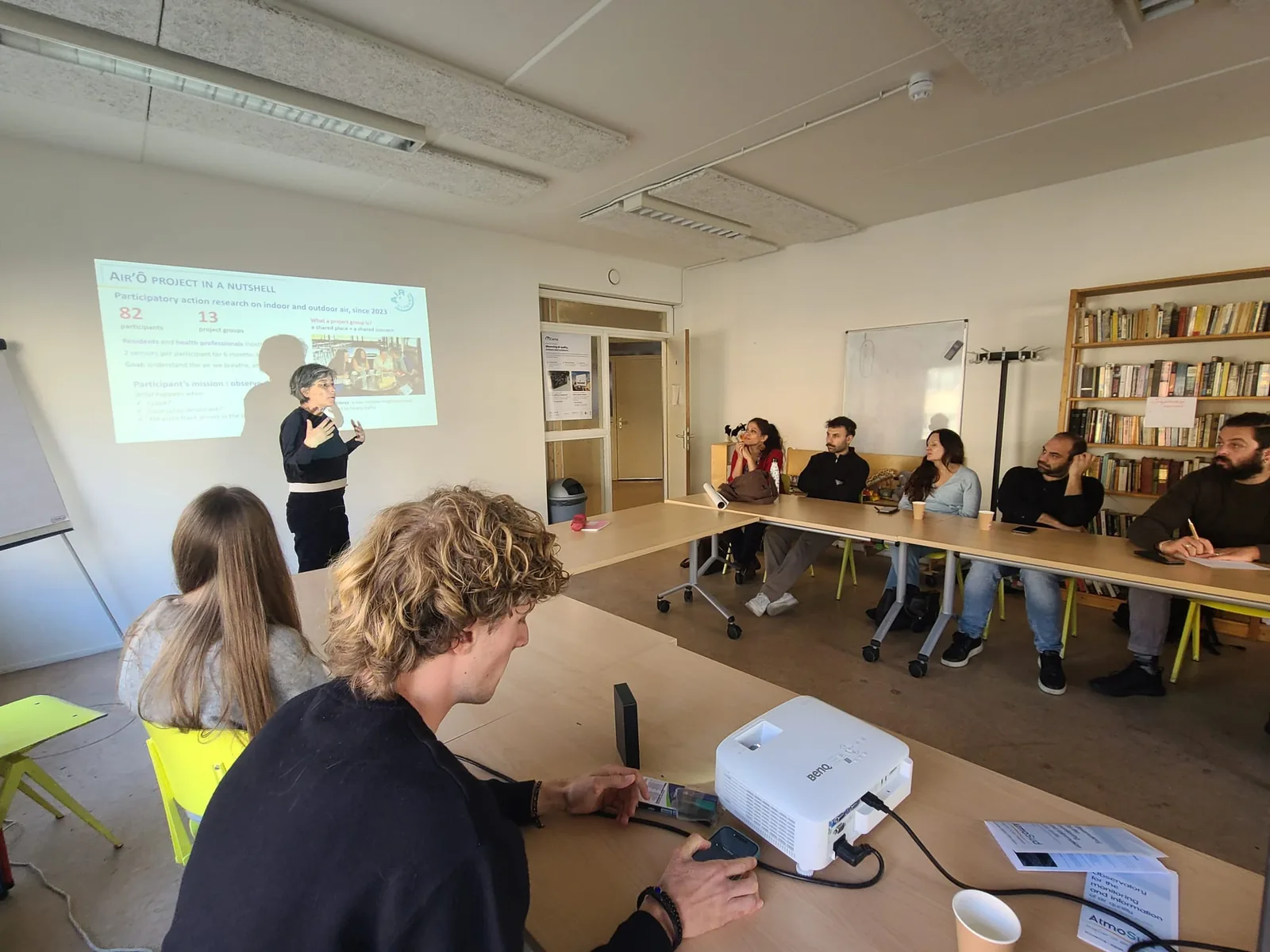
In Marseille, we work with two partners. AtmoSud, the regional air quality observatory, evaluates and qualifies our sensors against reference stations. Air citoyen uses them in its Air'Ô project, a participatory measurement initiative with residents and health professionals.
We presented this approach together, with Mathieu Izard, research engineer at AtmoSud, Magali Guyon, founder of Air citoyen, and Noa Giannone for AirCarto. Sensors developed as open source, data corrected sensor by sensor and available in real time, several pollutants measured, comparison with reference stations and modelling, individual support for participants: it was this combination that caught people's attention, both at our workshop and on the stand.
A walk through central Amsterdam with a sensor
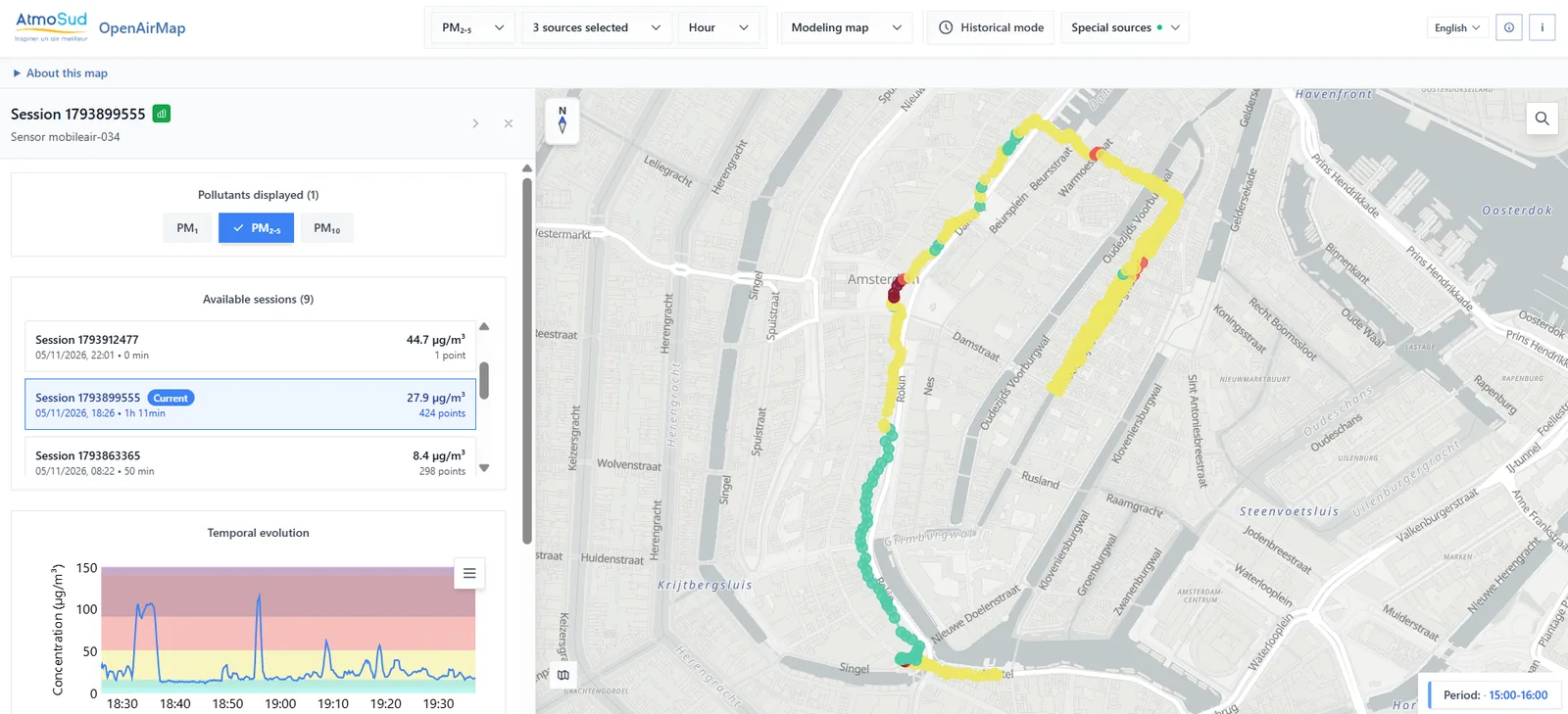
On Thursday evening, we walked through the city centre with a mobile sensor. Over 1 h 11 of measurements, PM2.5 averaged 27.9 µg/m³, with peaks above 100 µg/m³. The effect of walking past the coffee shops showed up in the measurements.
What comes next
Several avenues are open, with nothing decided at this stage: assimilating sensor data into modelling maps with Norwegian teams, ModuleAir and NebuleAir sensors in Italy, and Air citoyen's Air'Ô approach in other countries.