
Wood heating: Rennes Métropole lends ModuleAir sensors to its residents
In the Rennes metropolitan area, wood heating alone emits half of all PM2.5 fine particles. To help residents who heat with wood pollute less, Rennes Métropole lends them a ModuleAir for three weeks, one of the 60 sensors assembled by AirCarto in Marseille.
Why wood heating
The residential sector is the largest source of PM2.5 in the metropolitan area, and 93% of its emissions come from individual wood heating. Fireplaces, inserts and stoves make up 43% of individual heating appliances but 60% of fine particle emissions. According to a 2025 health impact assessment, PM2.5 exposure accounts for 127 premature deaths a year in the area. These figures come from Rennes Métropole, based on Air Breizh's emissions inventory.
The programme
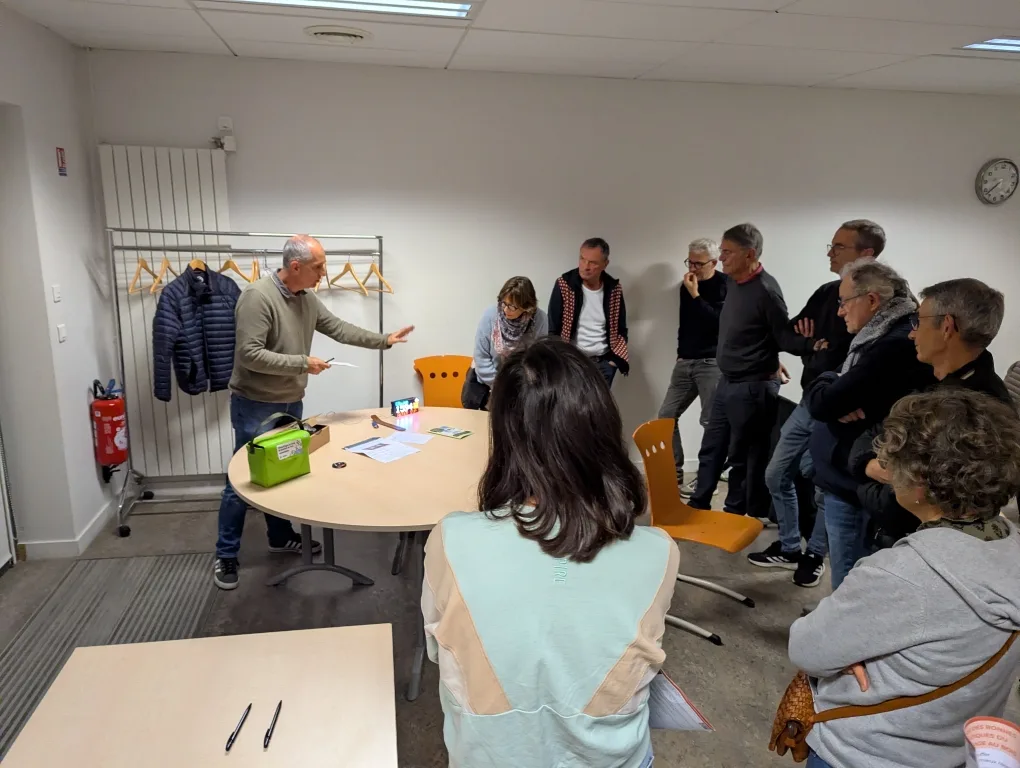
Each session starts with a meeting of about 1.5 hours: an introduction to the programme, practical advice (dry, untreated wood, stored away from moisture, lighting the fire from the top) and the equipment hand-over. Each participant leaves with a ModuleAir to monitor indoor air quality, a thermometer for the flue temperature and experiment sheets to run tests at home and interpret the readings.
- Session 1: Monday 9 November 2026, at the Maison de la consommation et de l'environnement (MCE), Rennes;
- Session 2: Tuesday 15 December 2026 at 6:30 pm, at the MCE;
- Session 3: Monday 25 January 2027 at 6:30 pm, at L'Accolade media library in Chevaigné, for residents of that town.
The programme is open to residents of the 43 municipalities of the metropolitan area who heat with wood, on registration with the MCE. It is run by Rennes Métropole and the French State, with the MCE and the consultancies Hygiade and LB Environnement. A poster campaign supports it, and leaflets are handed out in town halls and by chimney sweeps during their visits.
What a ModuleAir measures
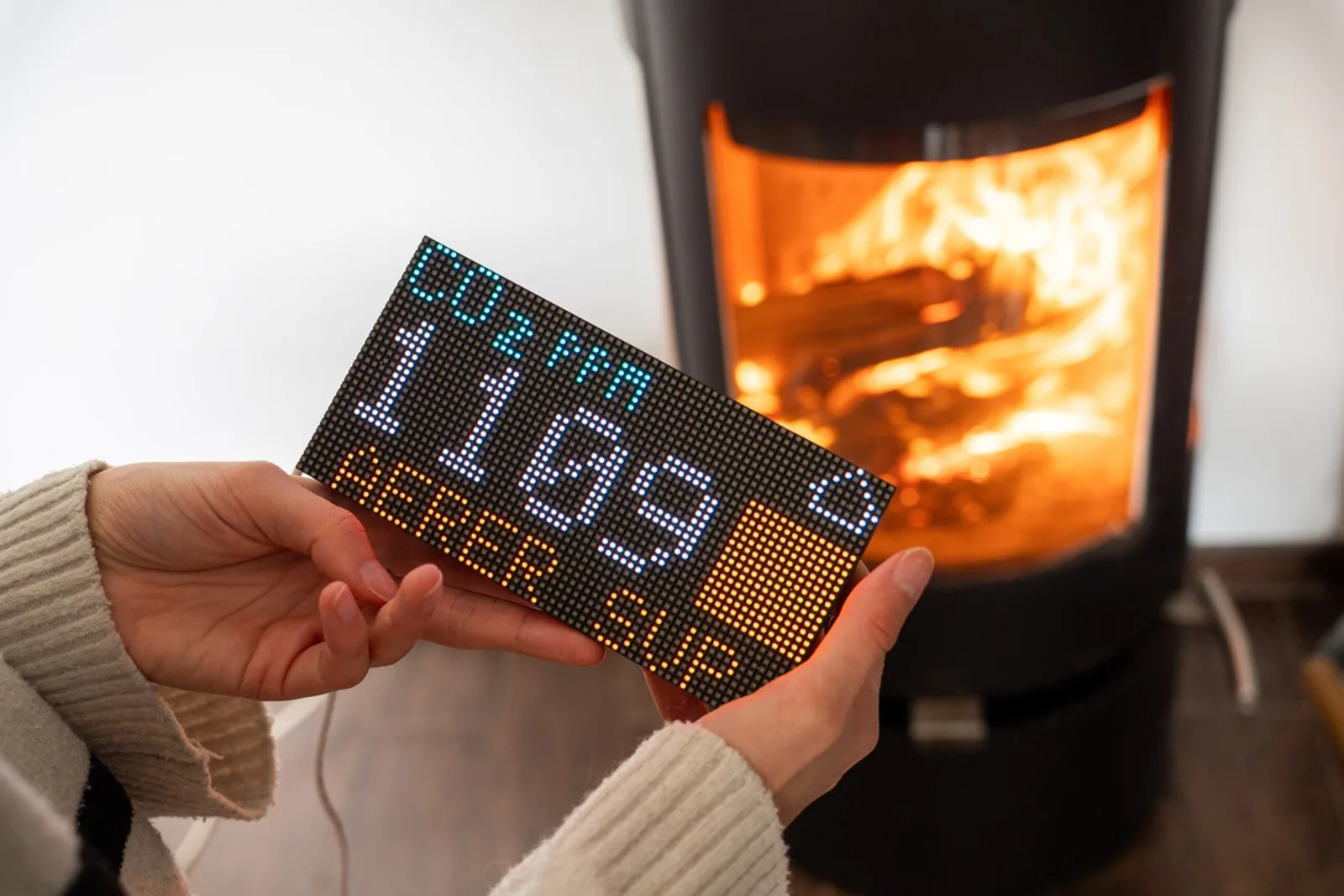
The ModuleAir continuously measures CO₂ and fine particles in indoor air and shows the values on a large LED display that everyone in the room can read. In a home, it shows how particle levels in the room change as the fire is lit and refuelled.
Delivery
The 60 sensors were delivered in two batches of 30 in early 2026, then tested by the metropolitan authority's teams before deployment.
Find out more
Rennes Métropole describes the programme and its advice on its page “Chauffage au bois : mieux chauffer, moins polluer” (in French). Ouest-France covered it on 4 November 2026.