

A sensor-building workshop at ETH Zurich
On 6 November, Paul Vuarambon led a two-hour workshop at ETH Zurich: understanding what sensors tell us about the air in a building, then building one.
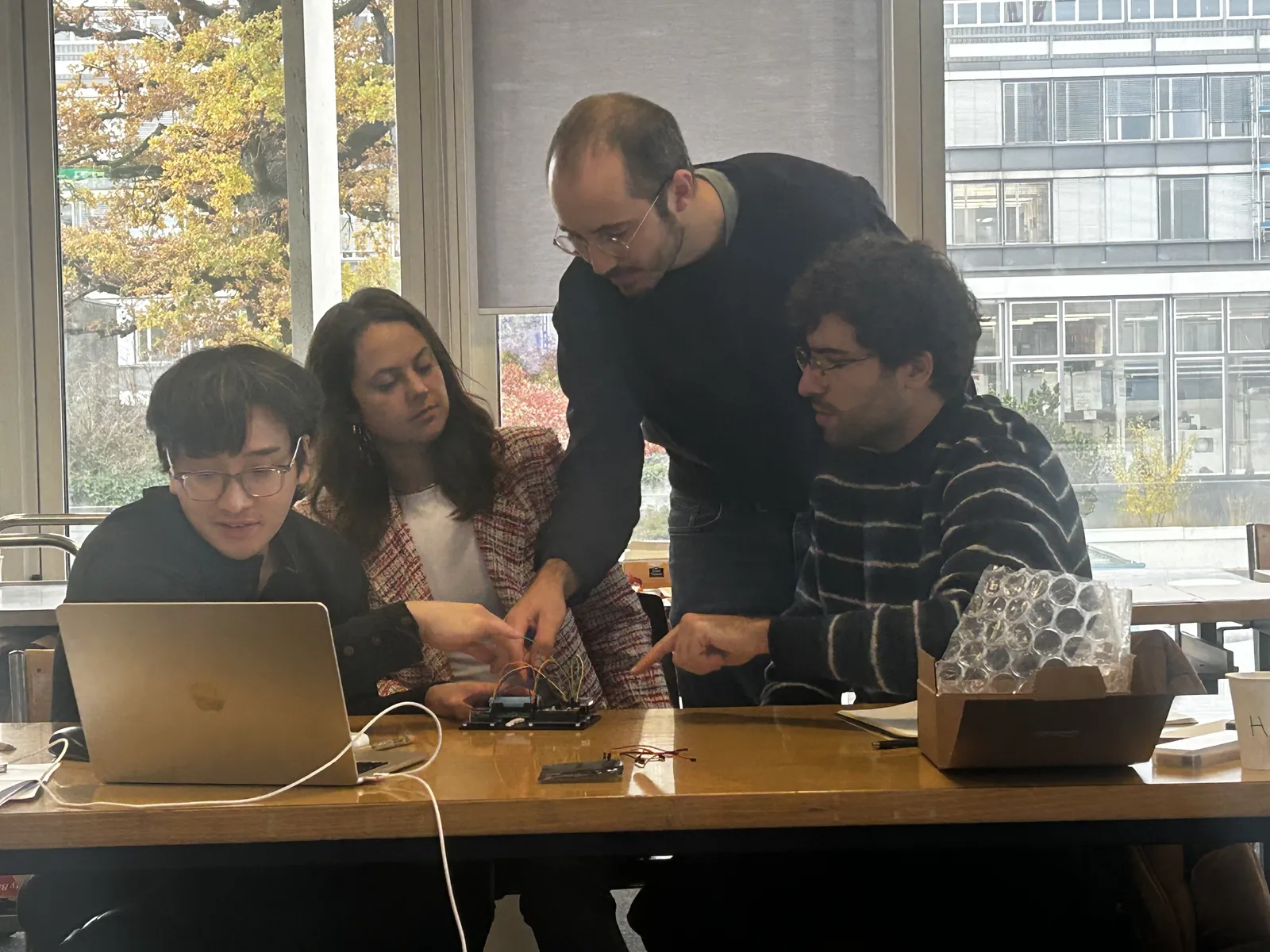
The workshop was part of module 3 of the CAS ETH in Regenerative Materials, Structural Specialisation, a continuing education programme on building materials. It took place on the Hönggerberg campus, at the invitation of Arnaud Evrard of the Chair of Sustainable Construction. It brought together 10 participants: architects, researchers and building professionals.
Why measure the air when you work on materials
CO₂, temperature and humidity show how a building behaves once it is occupied: air renewal, comfort, moisture dynamics. Open, low-cost sensors make it possible to track these parameters continuously in real buildings. For the participants, the questions were directly linked to their own projects: does the choice of building materials affect air quality, and how can sensors help us understand that effect?
Twenty minutes of presentation, then the wiring
After a short introduction to open-hardware sensor networks, the participants worked in groups of three or four on our EduKit CO₂. Each group wired its kit, started it up, connected it and launched its first measurements.
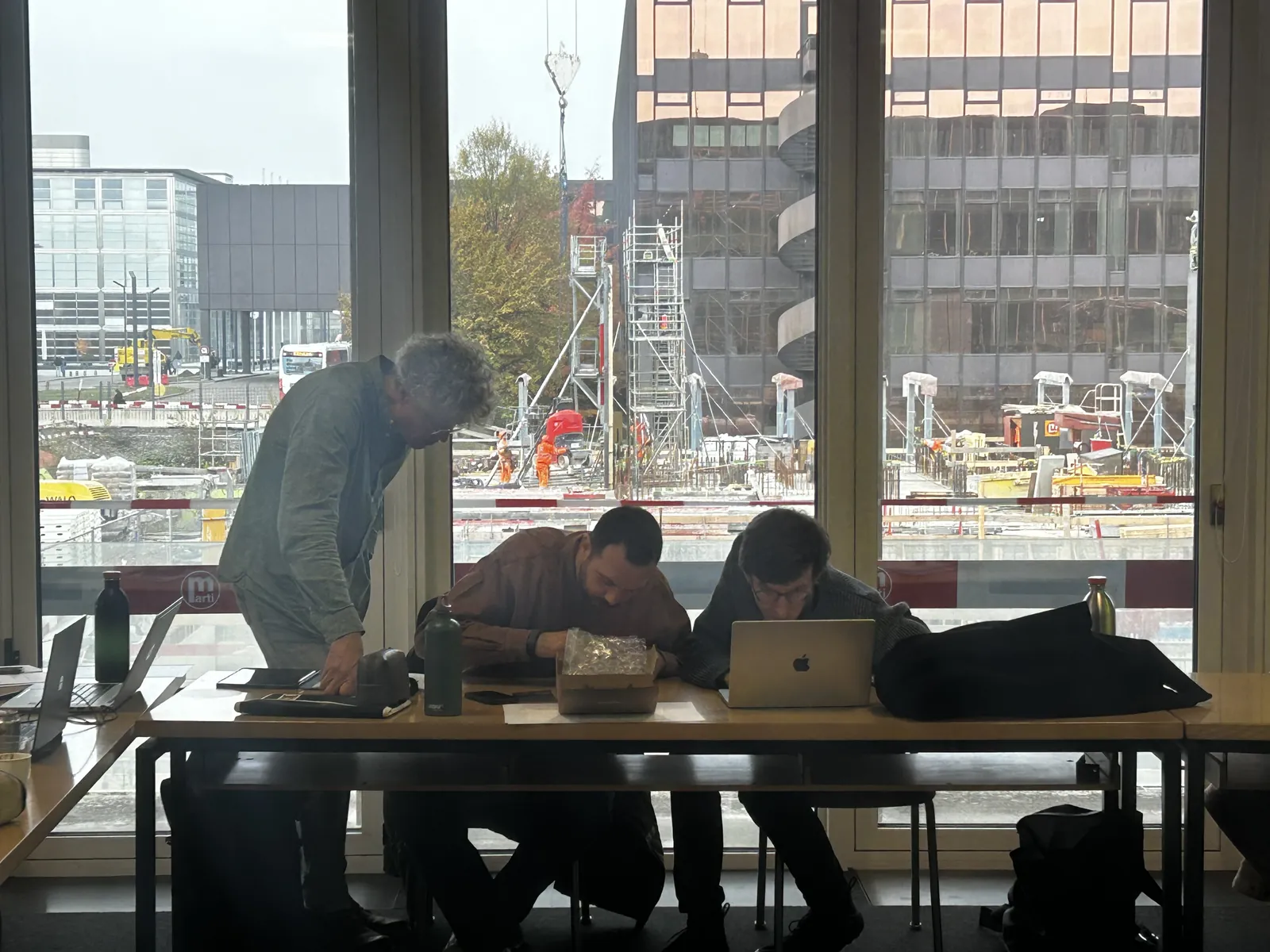
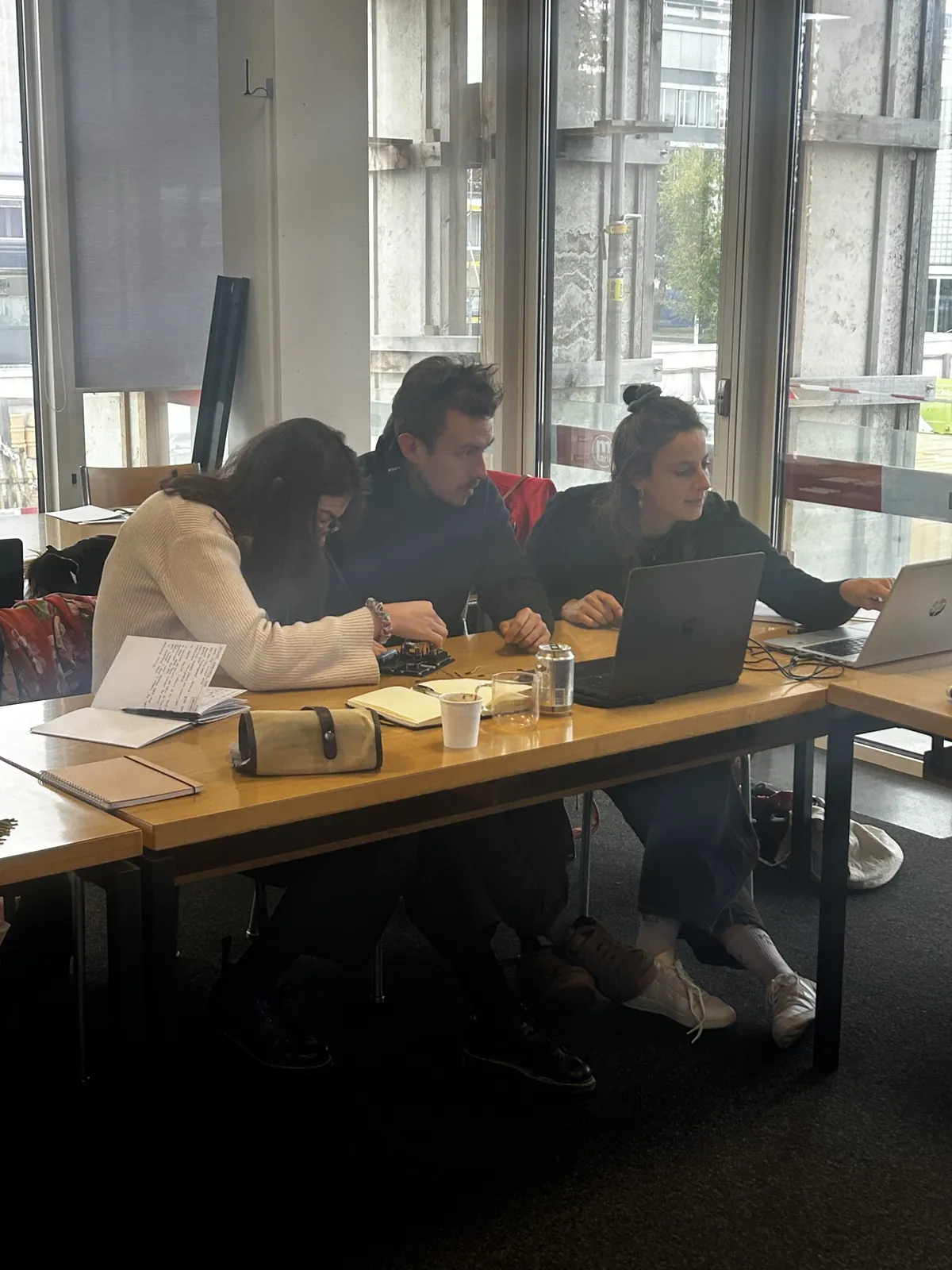
The groups at work on the Hönggerberg campus. Photo: Michael Di Dio, ETH - Chair of Sustainable Construction.
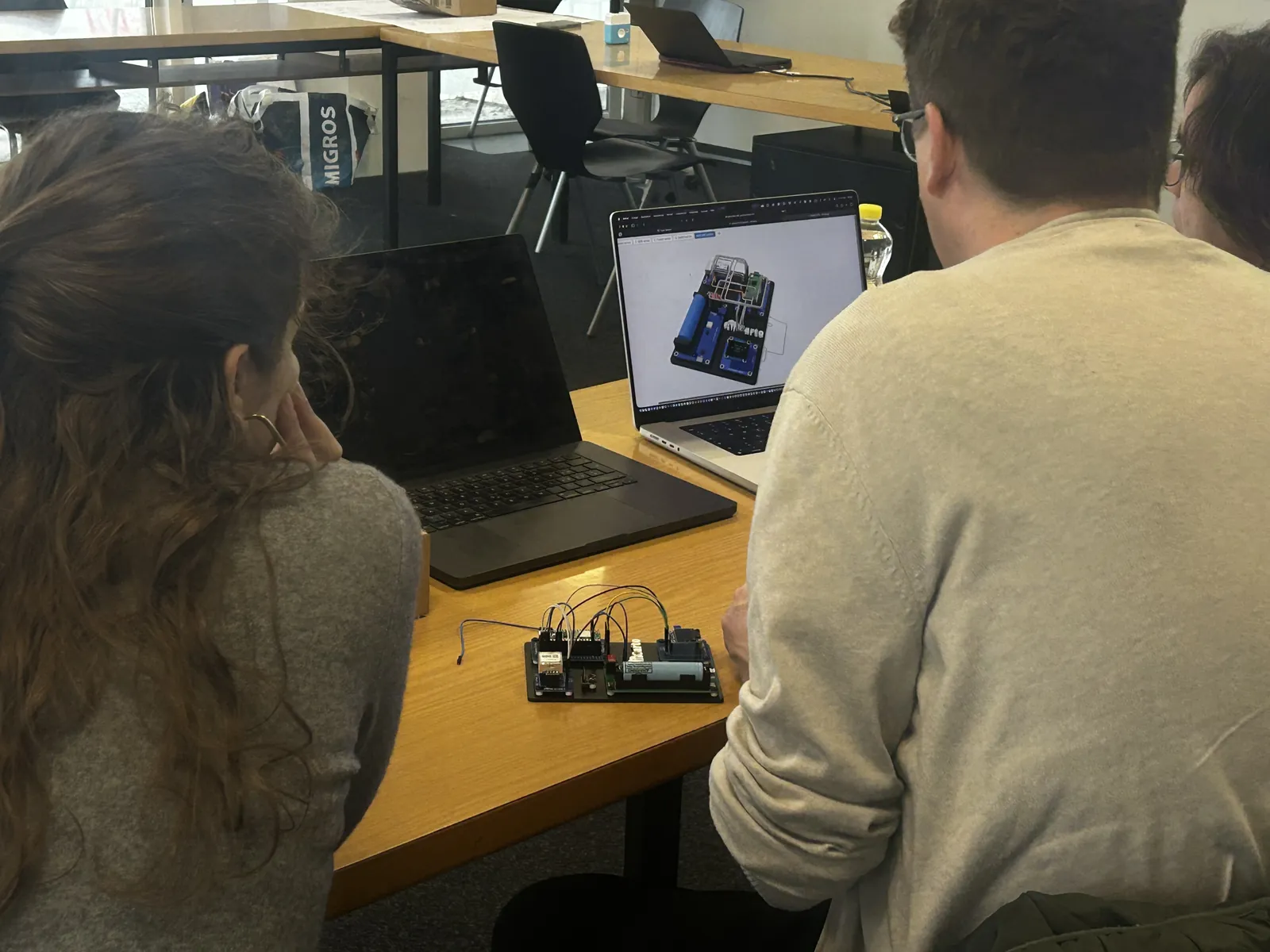
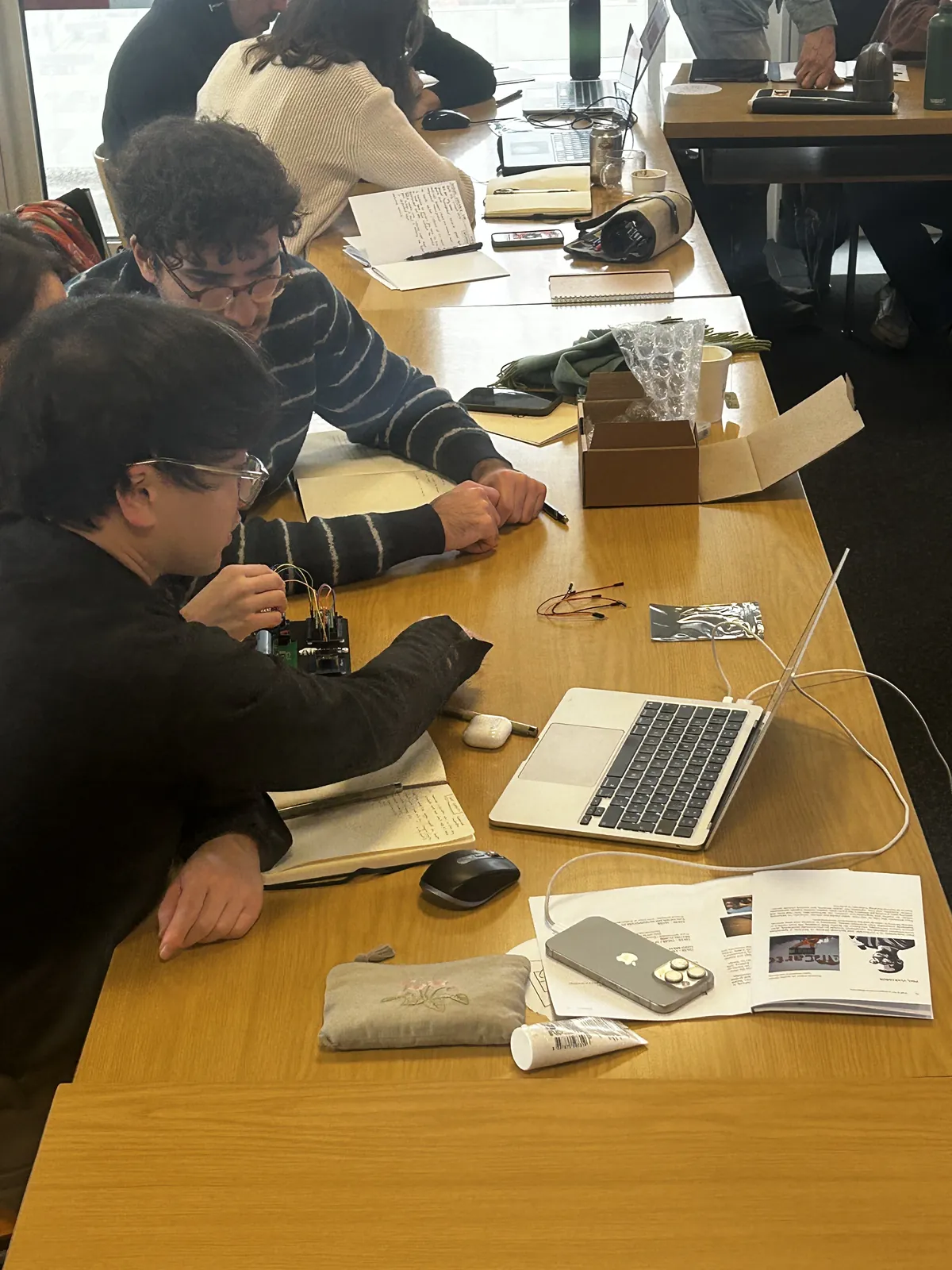
From the diagram on screen to the wiring on the table. Photo: Michael Di Dio, ETH - Chair of Sustainable Construction.
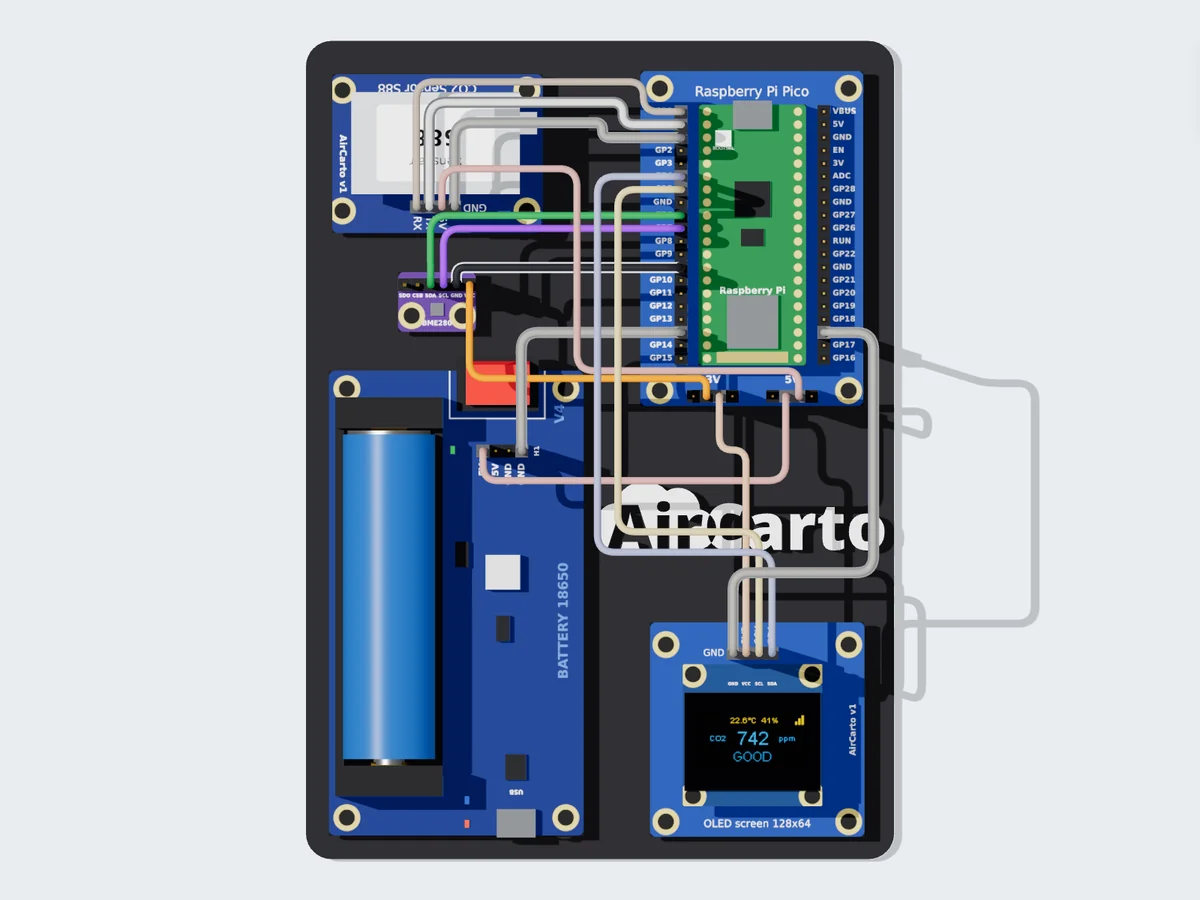
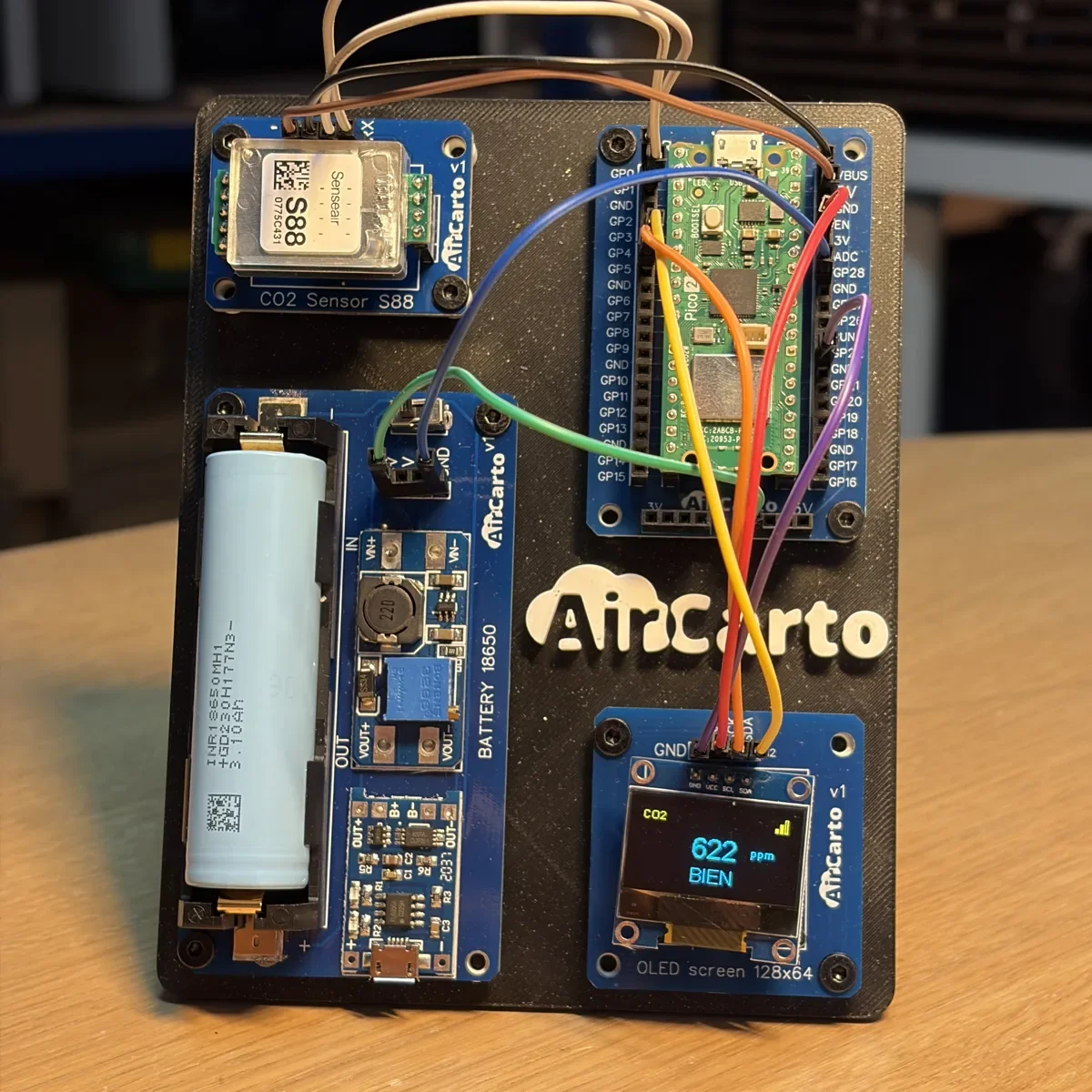
The EduKit CO₂ wiring diagram and an assembled kit. AirCarto images.
- Four kits assembled during the session
- Measurement of CO₂, temperature and humidity
- One value sent every minute over Wi-Fi
What we took away
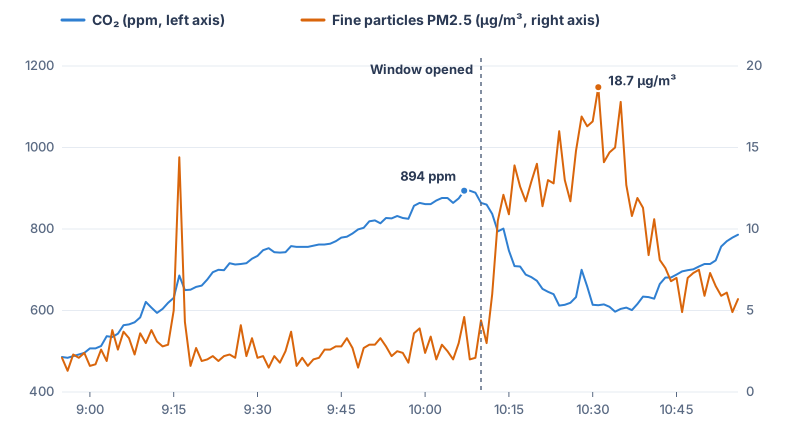
The room itself became the experiment. A ModuleAir placed on site tracked CO₂ rising from 484 to 894 ppm in just over an hour. When we opened the window, it fell back to around 600 ppm in less than 30 minutes. But fine particles rose at the same time, from 2 to 3 µg/m³ to nearly 19 µg/m³, because of a large construction site next door. Ventilating renews the air, and it also lets in whatever is outside: only measuring several parameters makes that visible.
We expect to come back next year.